

Contents
There’s nothing quite like that sinking feeling when your dog refuses to enter a new place, or worse, goes in but immediately starts showing signs of stress. You feel bad for them, frustrated with the situation, and honestly? A little lost about what to do next.
Moving your dog to a new environment, whether that’s your new apartment, your friend’s house, or just a different room, can go sideways fast if you don’t have a game plan. But here’s the thing: it doesn’t have to be a nightmare. I’ve spent years researching what actually works (and what definitely doesn’t), and I’m going to walk you through it.
What You Need to Know Right Now
- Going too fast ruins everything: Seriously, rushing this is the fastest way to create anxiety issues that’ll haunt you for months
- Your dog’s the boss here: they decide when they’re ready to explore more. Your job is to watch and listen
- Make it worth their while: Treats, praise, and patience turn scary places into “hey, this is actually pretty cool” ones.
- Keep things familiar: Same schedule, same routines this is their anchor when everything else is upside down
- Don’t be a hero: Sometimes you need a pro. That’s not a weakness; that’s smart
Why This Is Such a Big Deal for Dogs
Your dog experiences the world totally differently than you do. While you’re checking out the paint color and furniture layout, your dog is drowning in a tsunami of new smells. Every surface, every corner, every piece of furniture is screaming information at them through their nose.
And dogs? They’re control freaks about their environment. They like knowing where everything is, what happens when, and where the exits are. Throw them into a completely new space, and you’ve basically pulled the rug out from under everything that makes them feel safe.
The best inside dogs, the ones who spend most of their time indoors, can be especially thrown off by environmental changes. Their whole world is that indoor space, so when it changes, everything changes.
Before You Adopt: The Questions Nobody Thinks to Ask
If you haven’t brought your dog home yet, congrats on thinking ahead. When you’re making that list of questions to ask before adopting a dog, throw these on there:
- How does this dog react when things change?
- What happens when they get stressed?
- How many different homes have they lived in?
- What kind of places are they used to?
A dog who’s bounced between three foster homes is going to handle change differently than one who lived in the same house since puppyhood. Neither is better or worse, just different, and you need to know what you’re working with.
Furthermore, be real about your living situation. Are you on the lookout for medium-sized dogs suitable for indoor living? Great, those breeds usually do well in apartments and houses. But “good for indoor living” doesn’t mean “will automatically love YOUR indoor space the second they walk in.” They still need a proper introduction.
Getting Ready: Don’t Skip This Part
You can’t just wing this. Trust me, that’s how you end up with a dog hiding under your bed for three days straight.
Determine What You’re Working With
Be honest about your dog’s personality. Are they the type who charges into new situations, tail wagging, or do they need ten minutes to decide if that cardboard box in the hallway is safe? A confident Lab and a nervous rescue need entirely different approaches.
Even bold dogs can surprise you. The dog who rules the dog park might turn into a trembling mess in a new indoor space. Dogs are weird like that.
Burn Off Some Energy (But Don’t Overdo It)
Get your dog some exercise, about 30–60 minutes before the big introduction. Not so much that they’re exhausted, but enough to take the edge off. A tired-but-not-wiped-out dog handles stress way better than one who’s bouncing off the walls or completely drained.
Pack Smart
Grab these before you go:
- Their favorite blanket or bed (the stinkier the better—seriously)
- A toy they actually play with (not some new thing)
- The treats they go nuts for
- Their usual water bowl, if you can.
- Something interactive, like a Shapana Interactive Ball, to keep their brains busy.
These smell like home. They’re proof that not everything is different and terrifying.
The Actual Introduction: Take Your Sweet Time
Alright, showtime. You’ve got your stuff, your dog’s in decent shape, and you’re ready. Now slow down.
Start Outside or at the Edge
Let them sniff around the outside or the very edge of the space. They’re doing detective work, figuring out what this place is all about and whether it’s safe.
This procedure might take five minutes. It might take thirty. Doesn’t matter. Watch their body language. Ears forward and tail easy? Good. Tail tucked and ears flat? They need more time.
Keep Control When You Enter
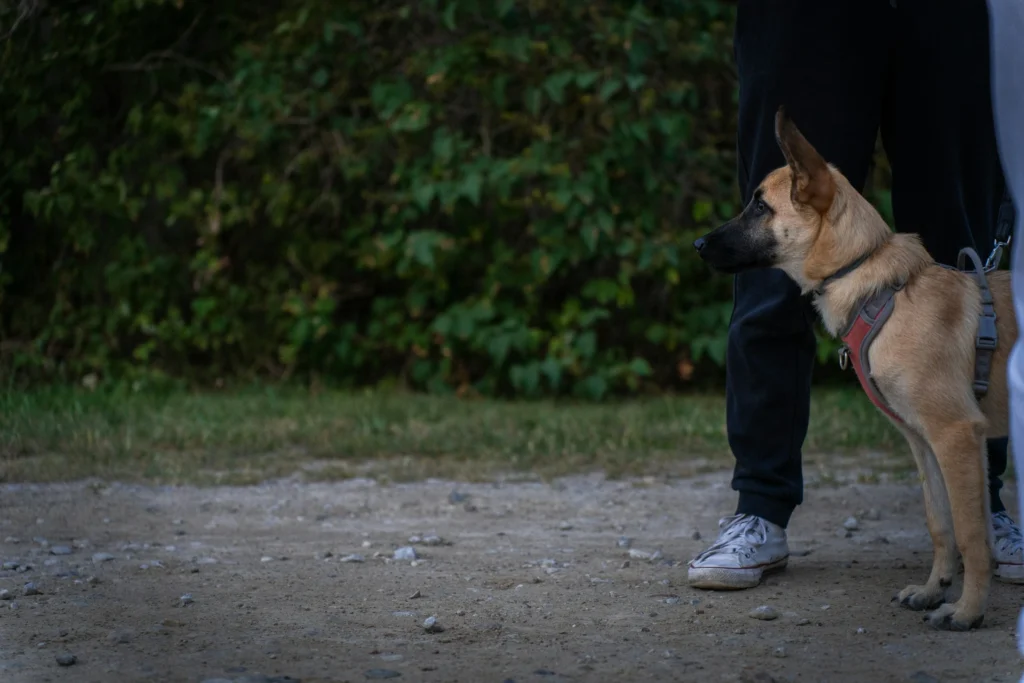
Even if it’s a fenced yard or enclosed space, keep that leash on. This isn’t about being controlling; it’s about being able to get distance fast if they freak out.
Stay calm. Use a boring, everyday voice. If you’re all anxious and hovering, your dog’s thinking, “Oh great, there IS something to be scared of here.”
One area at a time. Don’t try to show them the entire house in ten minutes. That’s overwhelming.
For the best inside dogs who’ll be spending their lives in this indoor space, room-by-room is the way to go. They need to feel okay about each space individually.
Reward Every Small Win
Every time your dog does something calm and curious, reward it. Sniffing calmly? Treat. Lying down? Treat. Looking at you instead of panicking? Multiple treats.
You’re teaching their brain: “New place = good stuff happens.”
This method is backed up by every dog trainer worth listening to. Positive reinforcement during transitions builds real, lasting confidence.
Set Up a Safe Spot
Pick one area that’s officially your dog’s safe zone. Their bed goes here. This location is where they can bail to when things get overwhelming.
Never, ever force them to leave this spot. It has to be completely pressure-free. Weirdly enough, when dogs know they have a guaranteed escape route, they’re more willing to explore.
For medium-sized dogs for indoor living, set the area up in a quiet corner away from where everyone’s walking through constantly. Add their familiar stuff and maybe that Shapana Interactive Ball for when they want to chill independently.
Reading Your Dog: The Cheat Sheet
Dogs can’t tell you “this is too much,” so they show you. Miss these signs, and things can go from uncomfortable to traumatic real quick.
You’re Good to Keep Going
- The body looks loose and relaxed
- The tail’s in its normal spot (maybe wagging)
- Breathing’s normal
- They’re taking treats
- Checking things out willingly
- Making eye contact with you
- Interested in toys
Pump the Brakes
- Licking lips or yawning (and they’re not tired)
- Looking away a lot
- Moving very slowly.
- Ears pulled back a bit
- Tail hangs low.
- Ignoring treats or toys they usually love
Stop Right Now
- Panting like crazy or drooling
- Shaking
- Won’t take any treats
- Trying to hide or get away
- Growling or showing teeth
- Tail completely tucked
- Whale eye (you can see the whites)
- Frozen in place
Red lights mean stop. Back up to somewhere they feel okay and try again later. Could be tomorrow, could be next week. There’s no prize for finishing fast.
Special Cases That Need Extra Attention
Moving to an entirely New Home
This is the big one. Everything they knew about their territory just got erased.
The first few days suck. I’m being honest with you. But here’s what makes it less awful:
Set up one room first with all their stuff—ideally where they’ll sleep. That’s home base. The rest of the house is off-limits for now. After a day or two, open up another room. Gradual expansion is your friend.
Keep their old schedule exactly the same. Same meal times, same walk times, same bedtime routine. When the whole world is chaos, routine is what keeps them sane.
For the best inside dogs who are used to indoor life, make sure that first room has everything: water, food, a bed, and something like a QDAN Soccer Ball Dog Toy to keep them busy while they adjust.
Visiting Someone Else’s Place
Give the homeowner a heads-up that your dog’s coming. Ask them to move anything valuable or dangerous. Also find out if they have pets; that’s a whole different ball game.
Don’t expect your dog to relax right away. Some dogs never fully chill in other people’s homes, and that’s fine. Not every dog is Mr. Social.
Bring a familiar toy. Having something to focus on helps cut through the anxiety of being somewhere strange.
Daycare or Boarding
These places are sensory chaos: dogs everywhere, people they don’t know, and sounds and smells cranked to eleven.
Do a trial run if the place offers it. Watch how the staff handles introductions. Are they patient? Do they give your dog space to decompress? Or do they just throw them in with the pack and cross their fingers?
Big red flag: any place that doesn’t ask about your dog’s personality or rushes the intro. This should’ve been on your questions-to-ask-before-adopting-a-dog list. If you knew you’d need daycare, knowing your dog’s social needs would help you pick the right place.
Parks, Trails, and beaches
Outdoor spaces are usually easier because they’re open and less claustrophobic. But they’ve got their own issues: other dogs, wildlife, and random people doing random things.
Go during quiet times first. Let your dog get comfortable with the space itself before you add the chaos of other dogs or crowds. And honestly? Not every dog needs to be a dog park regular. If yours finds it stressful, that’s good information, not a failure.
This matters extra for the best inside dogs who aren’t used to outdoor stimulation. Their brains are tuned for indoor environments, so outside can feel like sensory overload.
Mistakes That’ll Make Your Life Harder
Let me save you some pain:
Forcing things. Pushing your dog toward stuff they’re clearly scared of doesn’t build confidence—it destroys trust. Studies show forced exposure to scary stuff makes anxiety worse, not better.
Too much at once. New place + new people + new dogs all at the same time? That’s asking for a meltdown. One new thing at a time. This goes double for medium-sized dogs for indoor living who might already be sensitive to space changes.
Punishing fear. If your dog’s scared and you yell at them for it, you just confirmed that this place IS dangerous. They’re not misbehaving—they’re terrified. Huge difference.
Being impatient. Some dogs adjust in a couple hours. Some need weeks. Both are normal. Your dog’s timeline is the only one that counts.
Ignoring stress signs. Hoping they’ll “get over it” while they’re clearly falling apart? That’s the recipe for long-term anxiety issues.
Forgetting the essentials. No comfort items, no familiar toys, and nothing engaging leave your dog with zero anchor points. A Shapana Interactive Ball or something similar can be a lifeline in those first scary hours.
When You Need to Call for Backup
I’m big on DIY solutions, but some situations are above your pay grade. No shame in that.
Get a professional if:
- Your dog gets aggressive in new places
- They completely shut down and won’t eat or drink
- Anxiety isn’t getting better no matter what you try
- You’re moving with a dog who’s got trauma in their past
- You’re working with a rescue whose history is a mystery
A certified behaviorist or trainer who uses positive methods can build a plan for your exact situation. They’ve seen this hundreds of times and can spot patterns you’ll miss.
If you properly covered your questions to ask before adopting a dog, you might’ve seen some of this coming, but even perfect prep doesn’t prevent every challenge. Some dogs just need extra help.
Playing the Long Game
Here’s what people miss: this isn’t just about getting your dog comfortable in one new place. It’s about teaching them the skill of handling change.
More positive experiences = more confident dog overall. Research backs this up—dogs who successfully navigate environmental changes develop better overall coping skills.
Practice in low-stakes places. Take your dog somewhere new regularly, even when you don’t have to. Different walking route, friend’s yard, quiet pet store corner. Every win adds to their confidence account.
But also respect limits. Not every dog becomes the adventure buddy who handles anything. Some are homebodies. Medium-sized dogs for indoor living often thrive on predictability and calm, and there’s nothing wrong with honoring that.
You’re not trying to change who they are; you’re helping them cope when change happens anyway.
Tools That Actually Help
Real talk about what makes this easier:
Interactive toys are clutch. A Shapana Interactive Ball gives them mental stimulation without needing you. When they’re overwhelmed in a new space, having an engaging toy gives them something positive to zero in on. It’s not distraction; it’s redirecting them toward confident, independent behavior.
Calming aids like pheromone diffusers or anxiety wraps can help nervous dogs. Not magic, but they take the edge off.
Portable gates let you control which areas they can access. You’re not locking them away; you’re giving them manageable chunks of territory to claim.
Special treats saved just for new place introductions create powerful positive connections. Don’t use regular kibble; break out the premium stuff.
Bottom Line
Getting your dog comfortable in a new environment takes patience, observation, and letting them set the speed. You need the technical knowledge, understanding of dog behavior, ability to spot stress signals, and ability to follow the right steps. But you also need the instinct to read your dog, trust your gut, and adjust the plan based on what’s actually happening.
Research shows the dogs who struggle most with new places usually have owners who rushed things or quit too early. The ones who crush it? They had patient, attentive owners who put their dog’s comfort first.
Your dog’s counting on you to be their advocate, their safe person, and their guide when everything’s uncertain. That’s heavy, but it’s also a wonderful chance to strengthen your bond. When your dog looks at you in a scary new place and their body says, “Okay, if you say it’s safe, I trust you,” that’s the goal. That’s what it’s all about.
So slow down. Be patient. Celebrate tiny wins. Successful dog handling isn’t about getting it perfect; it’s about showing up consistently, paying attention, and always putting your dog first.
If you’re still planning, make sure “How does this dog handle new places?” is high up on your list of questions to ask before adopting a dog. The answer shapes everything about bringing your new buddy home.
Just went through this with your dog? Tell me about it in the comments. What worked? What didn’t? Did any tools or tricks make a difference? Share your experience with the Dogs Lovers Blog community; another dog owner dealing with this right now might need exactly what you learned. If this helped you out, pass it along to someone prepping for a move or dealing with an anxious pup.
Start with one safe room, provide familiar toys and bedding, and allow your dog to explore at its own pace.
It can take from a few days to several weeks depending on your dog’s age and temperament. Stay consistent and patient.